
"Immigration is not a right,
Immigration is a benefit."
ASSOCIATION OF THE FRENCH - SPEAKING AFRICAN DIASPORA - USA
Our Approach

At ADF-USA Inc., we take a holistic approach to helping the French-speaking African diaspora in need. We provide them not only with basic services, but also with education and emotional support. We work closely with communities to understand their needs and create sustainable solutions.
Our Impact
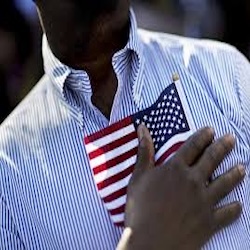
Over the years, we have positively impacted the lives of thousands of members of the African diaspora through our various programs. We have seen some of them, once hopeless and sick, regain hope. We are proud of the positive impact we have had on their lives.
Resources for Immigrants
Know Your Rights
Immigrants & NY
All immigrants have rights in New York—regardless of your status. This guide will help you understand your rights, where to get help, and what to do when interacting with ICE.
Community members and allies should be aware of their rights whenever dealing with Immigration and Customs Enforcement (ICE), Border Patrol, or other law enforcement.
If you are stopped by immigration or other law
enforcement, remember:
- Stay calm. Do not run. Do not resist or
- obstruct the officer.
- Do not lie or provide false documents.
- You have the right to remain silent. Anything
- you say can be used against you.
- If an agent asks if they can search you or
- your belongings, you have the right to say no.
- However, you may not physically resist.
- Police may pat down your clothing if they
- suspect a weapon.
- If you are not a US citizen and an immigration
- agent requests your immigration papers, you
- must show them if you have them with you.
- If you are stopped, detained, or harassed by
- law enforcement, try to get the agent(s)’
- name, number, and any other identifying
- information.
- You or someone else in the community can
- take video or audio recordings of interactions
- with law enforcement. You can also write
- down what happened after they leave.
- It is illegal for law enforcement officers to
- perform any stops, searches, detentions, or
- deportations based on your race, national
- origin, religion, sex, or ethnicity.
You can report interactions with federal agents to the Immigrant Defense Project (IDP).
Private Spaces
Your home and other “private spaces” (such as employee-only areas of a workplace) carry special protections that public spaces do not.
Officers can only enter private spaces if they have your consent or they show you a judicial warrant (signed by a judge).
Protected Areas
- In January 2025, the Trump administration cancelled a longstanding policy that directs ICE and CBP to avoid immigration enforcement in “sensitive locations” or “protected areas” such as schools, healthcare facilities, and places of worship.
- Despite these changes, New Yorkers still have some protections in these locations.
- A 2018 New York State Executive Order prohibits immigration enforcement at New York state facilities such as a public school or hospital unless ICE has a judicial warrant.
- The Protect Our Courts Act protects New Yorkers from arrest at state, city, and municipal courts without a judicial warrant.
- ICE and other agents cannot enter “private spaces” without a judicial warrant or consent of the owner.
Be aware of immigration fraud
Immigration law is complicated. Be careful when
discussing your situation with any person or business.
You should only speak to a lawyer or Department of Justice (DOJ) accredited representative for legal advice on your situation.
Never get immigration help from a “notario,” travel agent, tax preparer, forms preparer, or notary. In the US, a “notario” is NOT a lawyer!
If you need help with your case or have general immigration questions, call the Office for New Americans hotline at 1-800-566-7636.
Immigration Enforcement at the Workplace
Immigration Enforcement at the Workplace
This guide will explain what immigration enforcement is, what to do if they come to your workplace, and how to be prepared in case of a raid.
What is ICE?
- ICE is the acronym for Immigration and Customs Enforcement, a federal agency under the Department of Homeland Security (DHS) that enforces immigration law.
- ICE agents are federal agents, and are not the same as local police. Their uniforms may say “Police,” “Federal Agent,” “ICE,” or “HSI.” They may also not be in uniform. They may carry guns. Sometimes local police officers go with ICE agents on ICE raids.
What does ICE do at workplaces?
- Immigration agents may come to your workplace for a Form I-9 audit; a raid; or to detain specific people.
- With an ICE raid, the employer has no warning. With audits, there is often a subpoena beforehand. An ICE audit is “friendlier” than a raid but can also lead to damaging results.
Asylum
Immigration Paperwork and Related Questions
Change of Address
If you move, it is important that you update your address with the U.S. government.
Removal Orders
What is a Removal Order?
A removal order (formerly called a "deportation order") is issued when a U.S. court decides that a person is not legally allowed to stay in the United States. This can happen for different reasons, such as:
- Entering the U.S. without proper documents or a visa
- Overstaying a visa
- Committing certain crimes
- Violating immigration rules
Medicaid and Child Health Coverage
Medicaid and Child Health Plus Postpartum Coverage Extended from 60 Days to One Year
Useful Info
USCIS Immigration Fees
USCIS Updates Fees Based on H.R. 1
U.S. Citizenship and Immigration Services is publishing a federal register notice (FRN) based on the H.R 1 Reconciliation Bill (H.R. 1). Applicants must submit the new fees with benefit requests postmarked on or after July 22, 2025. USCIS will reject any form postmarked on or after Aug. 21, 2025, without the proper fees.
H.R. 1 established specific fees for various immigration-related forms, benefits, statuses, petitions, applications, and requests administered by multiple government agencies. This notice announces the new fees that are administered by USCIS. USCIS will deposit and retain a portion of the revenue from some of these fees in the Immigration Examinations Fee Account (IEFA). The remaining revenue will be deposited with the general fund of the Treasury. The FRN explains when the new fees take effect, instructions on their payment, when and if the fees may be waived, and consequences of the failure to pay. DHS must increase the fees each year based on inflation.
The new fees in this FRN are:
- A new fee of $100 for aliens who file Form I-589, Application for Asylum and for Withholding of Removal;
- Annual Asylum Fee (AAF) of $100 (which must be paid online) for all aliens with a pending Form I-589 for each calendar year their application remains pending.
- A new fee for aliens who file Form I-765, Application for Employment Authorization, for asylum, parolee, and Temporary Protected Status (TPS) categories. The categories are (a)(4), (a)(12), (c)(8), (c)(11), (c)(19), and (c)(34). The fees are:
- For initial EAD applications, $550; and
- For renewal or extension EAD applications, $275.
Immigrant Juvenile
What is special immigrant juvenile status (SIJS)?
Special Immigrant Juvenile Status (SIJS) provides a pathway to a green card for young people who have been “abandoned, abused, or neglected” by a parent. “Abandoned, abused, or neglected” are legal terms that have different definitions in each state. If you’re not sure if how you were treated by your parent(s) counts as abuse, neglect, or abandonment, check out some of the examples that follow, and talk to an immigration attorney (find free or low-cost, trusted support in your area by visiting ilrc.me/findhelp). Some practices that may be considered normal in some places, like physical punishment or being made to work at a young age, might be viewed
differently under your state’s law.
SIJS is only an option for you if you are under the age of 21 and unmarried. SIJS requires that you be in some type of state juvenile court proceeding. For example, you might already have a case in a juvenile court, such as family court where one of your parents is trying to get custody of you, or you might be able to open a case, for example by filing for a guardianship if you need a responsible adult to have legal authority to care for you. If you think there’s any chance you might qualify for SIJS, do not wait to speak with an immigration attorney.
Ouganda deal with US
Uganda agrees to deal with US to take in deported asylum seekers
An Ugandan official said the country would prefer to receive people from African nationalities under the agreement.
Uganda has agreed to take in nationals from third countries who may not get asylum in the United States but do not wish to return to their countries of origin, Kampala’s Ministry of Foreign Affairs said.
The ministry said on Thursday that the agreement is based on the conditions that those seeking asylum do not have criminal records and that they are not unaccompanied minors, adding that details of the deal are still being worked out.
US President Donald Trump aims to deport millions of undocumented immigrants, with his administration seeking to increase removals to third countries, including by sending convicted criminals to South Sudan and the southern African kingdom of Eswatini.
At roughly 1.7 million, Uganda already hosts the largest refugee population in Africa, according to the United Nations, and is the latest East African country to announce such a deal with Washington, joining Rwanda and South Sudan.
Asylum Cooperative Agreement
Who do these "Asylum Cooperative Agreements" apply to and whois exempt?
The government attorney in your courtroom today may ask the judge to deny your asylum application because they believe you can be deported to another country, such as Guatemala or Honduras, under an “Asylum Cooperative Agreement” with that country. Listen carefully in court and read this handout to understand your rights if the government makes this request.
One important exception is that the ACAs cannot apply to unaccompanied children (“UCs” or “UACs”). Beyond that, each agreement has its own exceptions that can be complex. It is best to consult with an attorney or Department of Justice accredited representative to determine whether you qualify for an exception.
As of the date of print, there are two possible ACAs that could apply to you. However, note that the U.S. government is actively pursuing other agreements and could argue that other ACAs apply to you as well.
Restricted Countries for US Entry
President Donald J. Trump Further Restricts and Limits the Entry of Foreign Nationals to Protect the Security of the United States
STRENGTHENING NATIONAL SECURITY THROUGH COMMON SENSE RESTRICTIONS BASED ON DATA: Today, President Donald J. Trump signed a Proclamation expanding and strengthening entry restrictions on nationals from countries with demonstrated, persistent, and severe deficiencies in screening, vetting, and information-sharing to protect the Nation from national security and public safety threats.
- The Proclamation continues the full restrictions and entry limitations of nationals from the original 12 high-risk countries established under Proclamation 10949: Afghanistan, Burma, Chad, Republic of the Congo, Equatorial Guinea, Eritrea, Haiti, Iran, Libya, Somalia, Sudan, and Yemen.
- It adds full restrictions and entry limitations on 5 additional countries based on recent analysis: Burkina Faso, Mali, Niger, South Sudan, and Syria.
- It also adds full restrictions and entry limitations on individuals holding Palestinian-Authority-issued travel documents.
- It imposes full restrictions and entry limitations on 2 countries that were previously subject to partial restrictions: Laos and Sierra Leone.
- The Proclamation continues partial restrictions of nationals from 4 of the 7 original high-risk countries: Burundi, Cuba, Togo, and Venezuela.
- Because Turkmenistan has engaged productively with the United States and demonstrated significant progress since the previous Proclamation, this new Proclamation lifts the ban on its nonimmigrant visas, while maintaining the suspension of entry for Turkmen nationals as immigrants.
- It adds partial restrictions and entry limitations on 15 additional countries: Angola, Antigua and Barbuda, Benin, Cote d’Ivoire, Dominica, Gabon, The Gambia, Malawi, Mauritania, Nigeria, Senegal, Tanzania, Tonga, Zambia, and Zimbabwe.
- The Proclamation includes exceptions for lawful permanent residents, existing visa holders, certain visa categories like athletes and diplomats, and individuals whose entry serves U.S. national interests.
- The Proclamation narrows broad family-based immigrant visa carve-outs that carry demonstrated fraud risks, while preserving case-by-case waivers.
- Burkina Faso
- Laos
- Mali
- Niger
- Sierra Leone
- South Sudan
- Syria
- Palestinian Authority Documents
JUSTIFICATION FOR PARTIAL SUSPENSION (Immigrants and Nonimmigrants on B-1, B-2, B-1/B-2, F, M, and J Visas)
- Angola
- Antigua and Barbuda
- Benin
- Cote d’Ivoire
- Dominica
- Gabon
- The Gambia
- Malawi
- Mauritania
- Nigeria
- Senegal
- Tanzania
- Turkmenistan
- Zambia
- Zimbabwe
Environmental Law and Protection
Environmental Law and Protection
Environmental Law and Protection
Program Overview
What is environmental law?
Environmental law is the field of study and development of legal rules (regulations, case law) aimed at preserving the global environment, encouraging the fight against harm to it, and planning rural and urban spaces as well as cultural heritage.
The environment as a common concept encompasses air, water, soil, natural resources, landscape, fauna, and flora. This means that environmental law includes all rules concerning the entirety of these elements that surround us.
What are the principles of environmental law?
Environmental law is based on 4 major principles outlined in the Environmental Charter: the prevention principle, the polluter-pays principle, the participation principle, and the precautionary principle. They derive either from conventional or customary international law, or from national law through constitutions or framework environmental laws.
Environmental protection principles have played a major role in environmental policies. They have greatly influenced State practices, negotiations of conventional rules, and even, more or less implicitly, international judicial decisions. These principles are enshrined in both international law and national laws of States.
What is the purpose of environmental law?
Environmental law constitutes one of the essential instruments for implementing public environmental policies within the framework of sustainable development. Despite this major role, teaching this fascinating and cross-cutting subject is still not very widespread in several States, particularly French-speaking ones.
A relatively young, multidisciplinary field with specific techniques, environmental law remains one of the areas where the gap between the existence of norms and the reality of their application is greatest, and whose effects are most strongly felt in daily life. The normative and institutional vitality attached to the branch of environmental law, which has been useful in building an extremely rich and varied legal corpus, now gives way to the observation of weak effectiveness of environmental law. And while we cannot deny that over the years, environmental law has had positive impacts in several areas, national implementation remains insufficient.
The 9th episode of the Sustainable Voices podcast revisits the advances and contribution of environmental law.
However, it is possible to intervene at various levels to promote environmental law, particularly through the transcription of international standards into domestic law, law enforcement, or education of populations. But to do this, capacity building in the field of environmental law must be supported.
Action for Sustainable Development
Action for Sustainable Development
The OIF has an instrument of unanimously acclaimed quality by external actors: the Institute of the Francophonie for Sustainable Development (IFDD). Established in 1988, following the Francophonie Summit in Quebec, the IFDD has been developing cooperation in service of energy transition, environment, and sustainable development for 30 years. It is urgent to limit global warming below 2°C. It is imperative to ensure access to reliable and renewable energy for a global population that will soon approach 9.8 billion by 2050. Facing multiple challenges such as climate change, deforestation, urbanization, waste management, access to drinking water, environmental law, governance, transportation, agriculture, and youth employment, the IFDD now has the mandate to support its member States and governments in implementing multilateral environmental agreements and achieving the Sustainable Development Goals (SDGs).
The IFDD works to train public, private, and civil society actors, unite Francophone expertise, finance concrete projects, strengthen communication and awareness, and promote education for sustainable development. In addition to contributing to the deployment of energy policies, environmental management, green and blue economy, and the development of systemic sustainability analysis tools, the IFDD plays a leading role in international negotiations on climate, biodiversity, and desertification.
For example, the institute has developed globally recognized expertise in developing national, local, and regional sustainable development strategies. The Objective 2030 platform offers a participatory funding tool and technical support for implementing field projects. In West Africa, the IFDD is conducting an ambitious program aimed at improving energy efficiency in new buildings, designing labeling for household appliances, and deploying an energy information system. It offers numerous online training courses and organizes webinars. It is accredited to the Green Climate Fund. Its publications are read by thousands of Francophones around the world.